


Design of steel structures — general rules and rules for buildings
StructuralCivil
412EngineersEngineers on demandEngineers on demand: by the hour, by the task, by project, to a timeline, part-time, full-time, after hours, on holidays, on retainer, on call.
Hire verified engineers, specialists and engineering firms for design, analysis, simulation, CAD, inspection, testing and complete technical projects.
A tiny CAD correction and a multidisciplinary industrial programme are not the same transaction. The platform does not pretend they are.
Repeatable, clearly scoped technical work with a fixed price, a stated deliverable list and a delivery date. What is not included is as visible as what is.
“Structural beam design and calculation for one steel beam.”
Browse servicesMode 02Custom, complex or uncertain scope. A structured technical brief becomes a statement of work, and qualified engineers submit comparable proposals.
“Complete structural design for a 5-storey commercial building.”
Post a projectMode 03Search directly on capability — discipline, specialisation, software, standard, jurisdiction, licence, availability and verified experience.
“ETABS structural engineer, IS 456, India, 8+ years, on-site.”
Search engineersMode 04Multidisciplinary projects and larger contracts. Hire one firm, several specialists, or have the required disciplines mapped and a team assembled.
“Factory design: civil, structural, MEP, process, fire and automation.”
Build a team620 disciplines across 16 families, modelled as a versioned ontology rather than a fixed dropdown. A legitimate new engineering field can be added without restructuring the marketplace.
Engineering of buildings, structures, transport networks, water systems and the public infrastructure that cities depend on.
Machines, thermal and fluid systems, vehicles, tooling and the manufacturing processes that turn designs into physical products.
Generation, transmission and use of electrical energy plus the electronics, control and instrumentation that govern modern systems.
Software, platform, data and AI engineering, including the digital twins and industrial software that drive physical systems.
Design, safety and optimization of chemical, petrochemical, bioprocess and industrial process plants.
Selection, processing, characterization and failure analysis of metals, polymers, ceramics, composites and advanced materials.
Aircraft, spacecraft, propulsion, avionics, defense systems and the autonomous platforms that fly them.
Ships, offshore structures, subsea systems, ports and the ocean environment they operate in.
Renewable and conventional generation, nuclear systems, storage, hydrogen and the engineering of decarbonization.
Protecting air, water, land and ecosystems while engineering resilience, circularity and sustainable resource use.
Medical devices, biological systems, pharmaceutical processes and engineering designed around the human body.
Engineering of farming systems, food processing, textiles and biological production at scale.
Extraction and processing of minerals, hydrocarbons and groundwater, and the earth mechanics that govern them.
Optimizing how engineered systems, factories and organizations perform, from reliability and quality to safety and cost.
Sound, light, quantum and applied-physics engineering for precision devices and measurement.
Hybrid and emerging engineering roles that combine disciplines and often have no single academic degree title.
Fixed scope, stated deliverables, named software and standards, and an explicit list of what is not included.
 3DaysRemote
Propulsion Engineering
 Mei-Ling IyerFrom$770
 2DaysRemote
Apparel Manufacturing Engineering
 Kenji IyerFrom$570
 3DaysRemote
Aircraft Structural Engineering
 Divya DlaminiFrom$1,000
 3DaysOn-site available
Offshore Wind Engineering
 Mei-Ling RahmanFrom$1,485
 2DaysRemote
Remote Sensing Engineering
 Priya HaddadFrom$920
 5DaysRemote
Ceramic Engineering
 Aisha ParkFrom$660
 2DaysRemote
Systems Engineering
 Kenji RahmanFrom$1,0003DaysRemote
Gas Processing Engineering
 Jonas YilmazFrom$1,100
The marketplace mechanics are proven. What sits between discovery and payment is the engineering operating layer.
The intake asks what an engineer would ask: discipline, asset, project stage, jurisdiction and applicable code, input files, required deliverables, whether licensure or site attendance is needed, and who owns the IP. The output is a structured statement of work, not a paragraph of free text.
Structured filters run before relevance, so a profile without the required capability never outranks one that has it. Each match shows the evidence behind the score — and states what is missing rather than hiding it.
Price, timeline, methodology, assumptions, milestones, team, software, standards, deliverables and site visits — normalised into one table. The platform does not choose for you; it makes the technical comparison honest.
Every contract opens a workroom with versioned files, RFIs, submittals, change requests, approvals and an audit log. Funds are released against accepted deliverables, and an engineering scope is never silently changed.
Reviews score technical quality, accuracy, documentation, scope management and code compliance separately — because one star rating tells you nothing about whether the calculations were right.
Credentials, software, standards, industries, delivery mode and completion history — all structured, all filterable, none collapsed into a single star rating.

Metallurgical Failure Analysis specialist — metallography & additive material qualification
Climate Engineering / Climate Adaptation Engineering specialist — life cycle assessment & water network modelling
Supply Chain Engineering specialist — reliability & rcm & fire protection design
Die Engineering specialist — tolerance & gd&t & jig & fixture design

Medical Device Engineering specialist — medical device design & verification & validation

Post-Harvest Engineering specialist — farm machinery design & hygienic equipment design
Remote Sensing Engineering specialist — slope stability & mineral processing flowsheet
Process Optimization Engineering specialist — bioprocess scale-up & relief system design
Each listing reads like a mini technical tender — background, problem statement, scope, constraints, inputs, deliverables, acceptance criteria and evaluation criteria.
We need the full structural design package — analysis, member sizing, detailing and calculation report — produced to a standard our local reviewing engineer can check and sign without redoing the work.
We need production-intent schematic and layout with a fabrication package that passes DFM at our assembly house first time, and an antenna layout that actually achieves range.
We need a full HVAC design for the classified areas — air change rates, pressure cascade, filtration and AHU selection — documented to survive a regulatory inspection.
We need a bankable design package — layout, yield, single-line diagrams and a grid compliance study — that will withstand a lender's independent engineer review.
We need to know why it failed and whether a change achievable within the existing tool can pass durability — or whether a new tool is unavoidable.
We need a converged process simulation, a heat and mass balance we can defend, a tagged P&ID set and equipment datasheets ready for enquiry.
One project rarely needs one engineer. Tell the platform the asset and it identifies the engineering disciplines that asset typically requires — then you hire one firm, several specialists, or ask for a team to be assembled.
Verified companies with a team roster, insurance, certifications and delivery capacity on record.
Structural and civil engineering for mid-rise buildings and industrial structures
 From $25,000
Mechanical product design, FEA and design for manufacture

 From $15,000
Power system studies, substation design and grid integration
From $15,000Process, mechanical and safety engineering for chemicals and pharma
 From $2,500
Every service states the code it is designed to and the revision that applies. These are the references most often requested, and the number of verified engineers working to each.
Design of steel structures — general rules and rules for buildings
Building code requirements for structural concrete
Rules for construction of pressure vessels
Centrifugal pumps for petroleum, petrochemical and natural gas industries
Functional safety of electrical and programmable electronic systems
Harmonic control in electric power systems
Plain and reinforced concrete — code of practice
Specification for structural steel buildings
Energy standard for buildings except low-rise residential
Safety of machinery — safety-related parts of control systems
Installation of sprinkler systems
Minimum design loads and associated criteria for buildings and other structures
Engineering work is not finished when a file is sent. Each stage produces a specific artefact, in a stated format, and cannot be passed until the gate on it is closed.
Before any drawing is produced, the engineer states the governing code, load cases, material grades, environmental class and every assumption the calculation rests on. Nothing downstream is accepted until this is agreed.
Client signs off the basis before calculation begins.
Hand calculations, spreadsheets and analysis model outputs are delivered together, with each result traceable to a clause reference. Utilisation ratios and governing load combinations are stated explicitly rather than buried in an appendix.
Independent checker verifies before drawings are started.
General arrangement, detail and fabrication drawings issued at a stated revision with a full revision history. Native model files are included so the work can be continued by anyone, not only the engineer who produced it.
Drawing register reconciled against the scope before issue.
Every comment raised by the client, checker or approving authority is logged, answered and marked closed. The close-out record is part of the deliverable, so the reasoning behind late changes survives the project.
No open comments at handover.
The final package carries the engineer's verification status, the standards applied and the limits of the design. What the work does not cover is stated as plainly as what it does.
Released only after payment is secured in escrow.
Proficiency is declared per tool and shown on the profile, because a structural engineer who works in ETABS is not interchangeable with one who works in STAAD.
Share of engineers in each category listing the tool on a verified profile. Scroll the row to see every category.
An engineer who has worked in a sector already knows which constraint kills a design. These are the ones that decide the shape of the work before the first calculation.
Area classification drives almost every equipment decision. A design that ignores the zone boundary is not a cheaper design, it is an unbuildable one.
Connection studies govern the programme. Harmonic limits, fault levels and protection grading are agreed with the network operator before equipment is ordered, not after.
Fire strategy and accessibility are not late-stage additions. They determine structural grid, core position and escape geometry from the first sketch.
Cleanability and validation drive detail design. Every weld, drain fall and surface finish is specified because it will be inspected and documented.
Tooling lead time sets the design freeze. A change that is trivial on screen becomes expensive once the die is cut, so the release gate is enforced hard.
Consent conditions and catchment behaviour bound the design envelope. Hydraulic assumptions are defended against the regulator, not only the client.
Machinery safety is a system property. A guard, an interlock and a safety PLC only work when the performance level has been calculated across the whole chain.
Class approval sits alongside the client. Structural, stability and machinery submissions follow the society's rules, and the review cycle is part of the programme.
Most disputes on engineering work come from a boundary nobody wrote down. Both sides of that boundary are stated before a contract is formed.
A calculation check and a plant-wide automation replacement need different contracts, different checking regimes and different payment structures. They are not the same product at different prices.
$80 – $600Fixed price, paid on delivery
Beam and column capacity check
Single-line diagram markup
Bill of materials from a model
$600 – $6kMilestones in escrow
Structural design of a warehouse frame
HVAC load calculation and plant selection
PCB layout with signal-integrity review
$6k – $75kStaged, with gate approvals
Process plant detailed design
Substation primary and secondary design
Bridge assessment and strengthening scheme
$75k+Retained team, monthly draw
Plant-wide automation replacement
Multi-site renewable connection programme
Vehicle platform engineering support
That is why trust here is multidimensional, payment is milestone-funded, confidentiality is native, and the boundary between verification and licensure is stated plainly rather than blurred.
Identity, education, registration, certification, company and insurance are separate verified fields — not one badge. You can tell platform reputation apart from professional qualification.
Funds are placed in escrow and released against accepted deliverables. Hourly work is tracked; fixed-price work is funded per milestone before it starts.
Private and invite-only projects, NDA workflow, confidential file labels, watermarked previews, expiring links, download controls and a full audit trail.
Versioned files, revision notes, approval states, RFIs, submittals and change orders. Which revision is authoritative is always answerable.
What a badge is not. A marketplace verification badge confirms that a document was checked. It is not a licence to practise engineering and does not grant legal authority to certify, stamp or seal work in any jurisdiction. Where local law requires a registered professional to sign off a design, that sign-off must come from someone registered in that jurisdiction — the platform separates design assistance, drafting, analysis, review and professional sign-off deliberately.
Most platforms collapse trust into a badge. Here each level states exactly what was checked, by whom, and what it does not cover.
Government photo identification matched against a live capture, and a working address on record. This is the floor, not a credential: it says the account belongs to a real person, nothing more.
Degree certificates and transcripts confirmed directly with the awarding institution, not accepted as an upload. Where an institution cannot be reached, the profile says so rather than quietly passing.
Professional registration checked against the issuing board's public register, with the jurisdiction and expiry recorded. The profile shows where the engineer may sign work, and where they may not.
A completed engagement reviewed by a second licensed engineer in the same discipline: calculations re-run, assumptions questioned, drawings checked against the stated standard. This is the only level that says anything about the work itself.
Each case study records the project type, scale, role, tools, standards, deliverables, the actual challenge, the approach and measurable results.
A 7-storey 1970s office block had to stay occupied through a seismic retrofit. The original drawings were incomplete, concrete strength varied by 40% between cores, and the client could not vacate more than one floor at a time.

A die-cast aluminium pump housing was 22% over its mass target but the tool was already cut. A new tool would have cost the programme five months.
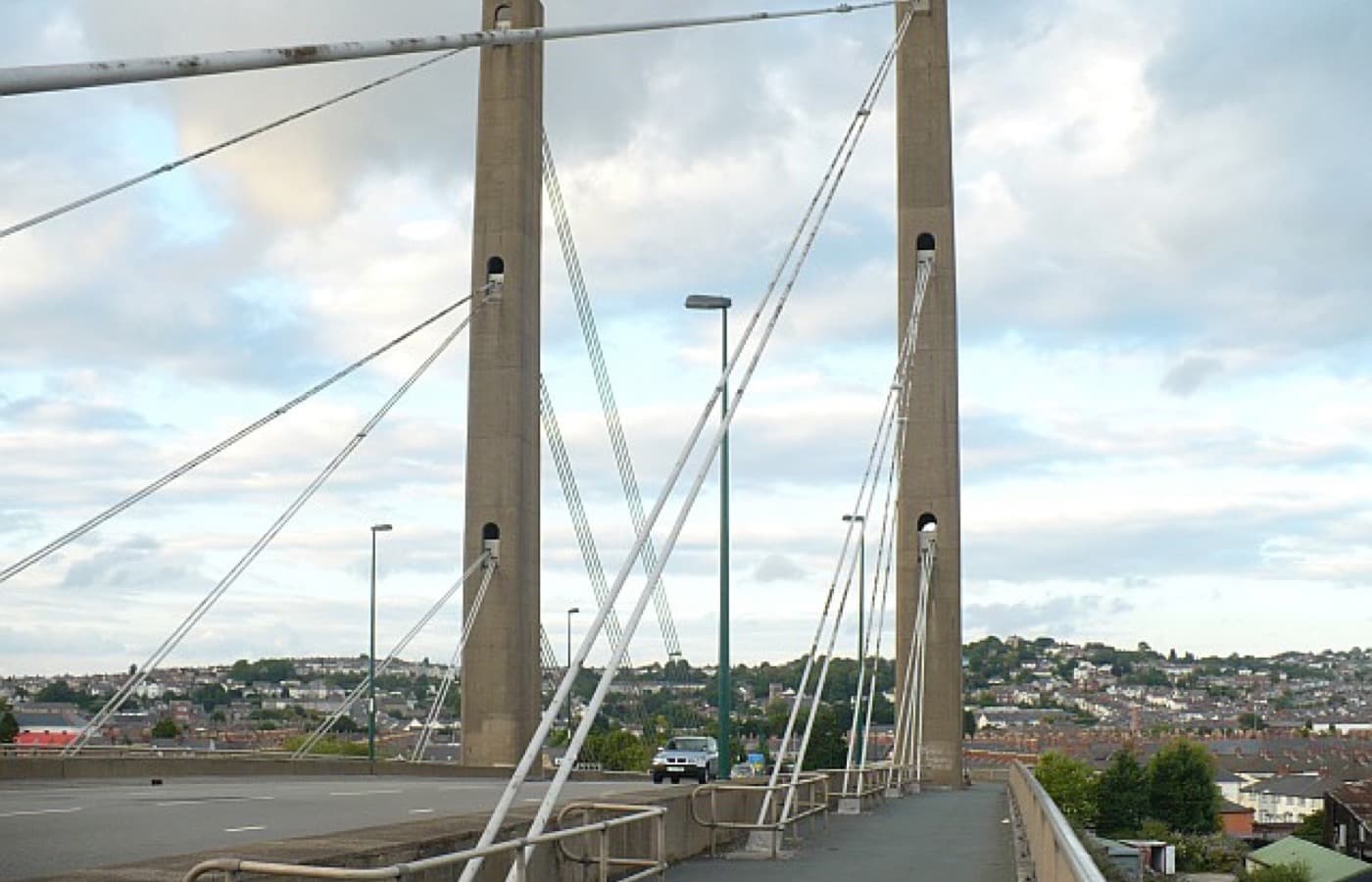
A 42 MWp plant's provisional connection offer carried a reactive capability condition the originally specified inverters could not meet across the full voltage range. The issue surfaced three weeks before financial close.

Questions, answers, case studies and tutorials — ranked by correct answers, peer endorsement and verified expertise rather than raw posting volume.
The same discipline behaves differently across sectors. Industry is a first-class dimension, not a keyword.
Every award says what it is judged on before nominations open. No category is decided by popularity, and no panel judges outside its own discipline.
A body of work that changed how a discipline is practised, evidenced by adoption in codes, standards or regulatory guidance.
The most consequential contribution within a single discipline family in the preceding three years, judged by practitioners in that family.
Work of unusual quality by an engineer under thirty-two, where the engineer carried technical responsibility rather than assisting.
Sustained independent checking that caught consequential errors, recognising the reviewers whose work is invisible when it succeeds.
Tuition is only part of it. Software licences, standards access, examination fees and supervised hours are what actually stop people qualifying, so those are what these cover.
Open to accredited engineering programmes worldwide. Assessed on technical work submitted, not on grades alone.
For research with a defined industrial problem behind it. Proposals are reviewed by practising engineers in the relevant discipline.
For engineers with the experience to sit a professional review but without an employer funding it.
For qualified engineers returning after two or more years away from practice, for any reason.
Each engineer here held technical responsibility for the work described — their name is on the calculation, the test report or the design decision.
Tested diaphragm stiffness assumptions in mass timber towers and found the code value unconservative above eight storeys, prompting a revision now under consultation.
Developed a grading method for solar plants connecting to weak rural networks, where conventional settings either nuisance-trip or fail to detect faults.
Redesigned a diagnostic device enclosure to survive repeated autoclave cycles, extending service life from months to years in clinics without single-use budgets.
Produced the test data that established defensible fatigue knockdown factors for printed titanium brackets, letting them be used in primary load paths.
Built a gauging method using commodity sensors that produces rating curves accurate enough for design in catchments with no historical record.
Devised a validation sequence for safety-instrumented functions that can be executed during planned shutdowns, removing a recurring week of lost production.
Reassessed scour depth at forty-one county bridges and showed the standard riprap detail was failing at eleven of them, leading to a revised countermeasure specification.
Established a fixturing and sequence method that holds flatness on thin-gauge welded frames, cutting post-weld straightening from every unit to fewer than one in twenty.
The full record of who was recognised, for what, and in which discipline.
Yuki NakamuraEarthquake EngineeringOccupied-building seismic retrofit sequencing
Inés CastilloStructural EngineeringTimber diaphragm stiffness revision
Meera RaghavanProcess EngineeringRelief and blowdown sizing practice
Kofi MensahElectrical EngineeringWeak-grid protection grading
Henrik LindqvistPower Systems EngineeringOffshore harmonic study methodology
Adaeze OkonkwoStructural EngineeringLong-span residual capacity assessment
 Clara MendesWater Resources Engineering
Non-stationary design storm revision
Tomás FerreiraMechanical EngineeringCollaborative cell safety certification
Scroll the rail to move back through previous years.
Pick a family to see what sits inside it. 620 disciplines are modelled as a versioned ontology, so a new engineering field can be added without restructuring anything.
Engineering of buildings, structures, transport networks, water systems and the public infrastructure that cities depend on.
Clients and engineers dispute less when both sides use the same words. These are the terms that appear most often in scopes, and what they are taken to mean here.
The supply side is engineering only, and the platform understands engineering work as structured data rather than free text. Every service, project and profile is tagged with discipline, specialisation, task, deliverable, software, standard, industry, jurisdiction and project scale.
That means a search for an ETABS structural engineer working to IS 456 in India with eight years of experience returns people who actually satisfy those constraints — a profile with more marketing text cannot outrank one that meets the hard requirements.
Platform verification confirms that credentials were checked. It is not a licence to practise and it does not grant legal authority to certify engineering work anywhere.
Where your jurisdiction requires a registered professional to sign off, you need someone registered in that jurisdiction. The platform treats design assistance, drafting, analysis, review and professional sign-off as separate things, and a project brief can require a verified registration for the jurisdiction you nominate.
Projects can be public, private to invited engineers, or NDA-gated. Files carry confidentiality labels with view-only permissions, watermarked previews, download controls, expiring links and a full access audit trail.
IP terms are part of the contract, not an afterthought. On final payment, deliverables and their IP transfer to you unless the contract states otherwise.
Fixed-price work is funded per milestone before the milestone starts, and funds sit in escrow until you accept the deliverable against the acceptance criteria agreed in the contract. Hourly work is time-tracked.
If a deliverable does not meet the stated acceptance criteria, it goes to revision, then to the resolution process. Scope changes go through a change request with the cost and schedule impact stated before the work is done.
No. Tell the platform what you are building and it maps the disciplines the asset typically requires — a factory, for example, usually needs civil, structural, mechanical, electrical, process, HVAC, fire, plumbing, automation and safety input.
From there you can hire one multidisciplinary firm, hire several specialists into one coordinated workroom, or ask the platform to assemble a team with a named lead and discipline leads.
Yes. The platform is deliberately built for the full range — a graduate selling a one-hour consultation, a specialist solving one narrow technical problem, a team delivering a design package, a firm running a multidisciplinary project, and enterprise clients sourcing hundreds of engagements.
Project scale is an explicit field, from micro through to enterprise, so small work is discoverable rather than buried under large contracts.
Describe the technical problem, not just the job. You will get a structured statement of work, matched engineers with explainable fit, and comparable proposals you can evaluate on the same axes.
Engineering centres and regional offices across the United States and Canada, with support coverage spanning every working hour.
 Northeast office
Capabilities on site
24/7
Support window
< 2 hr
First response
Local
Site coverage